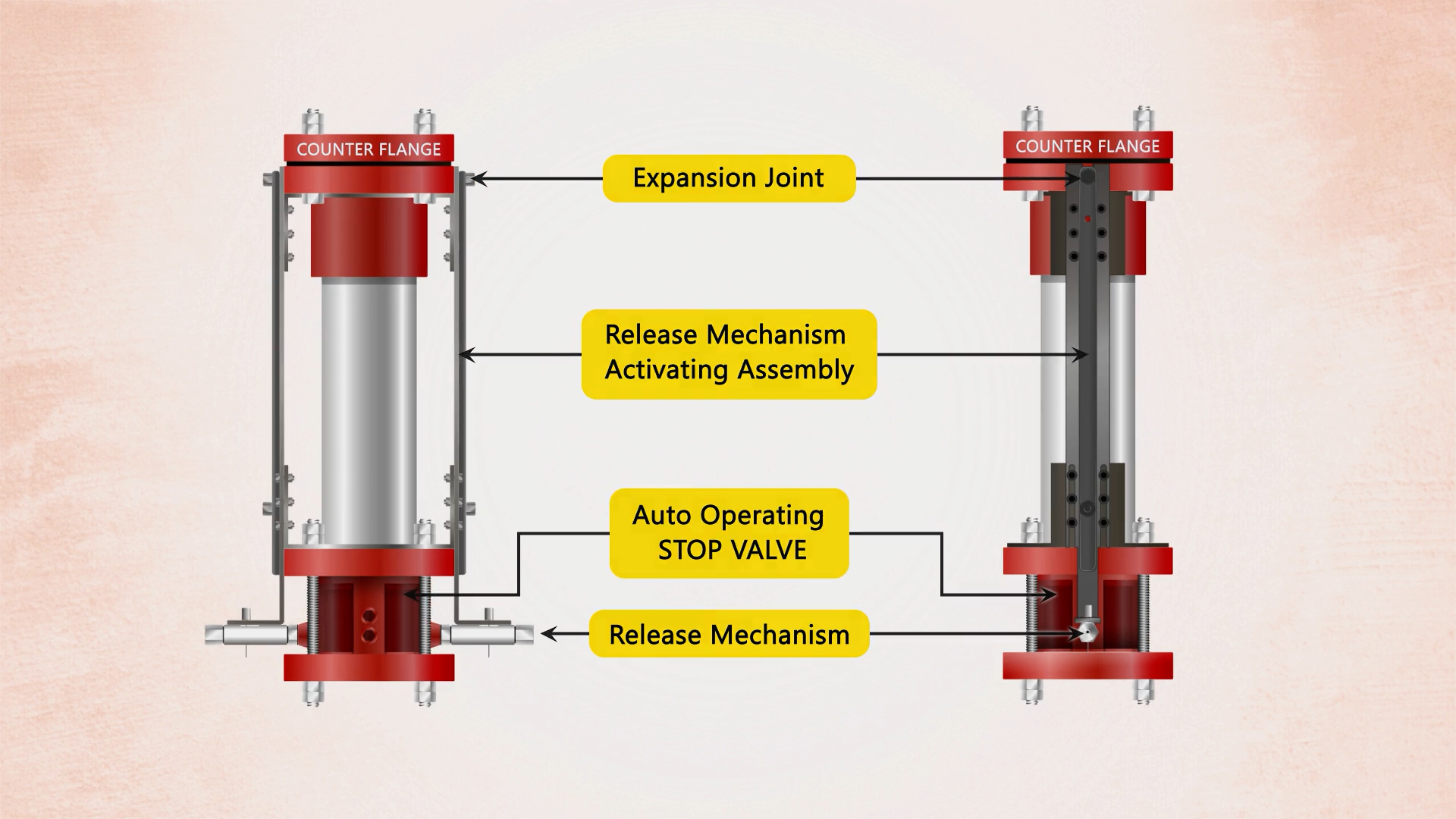
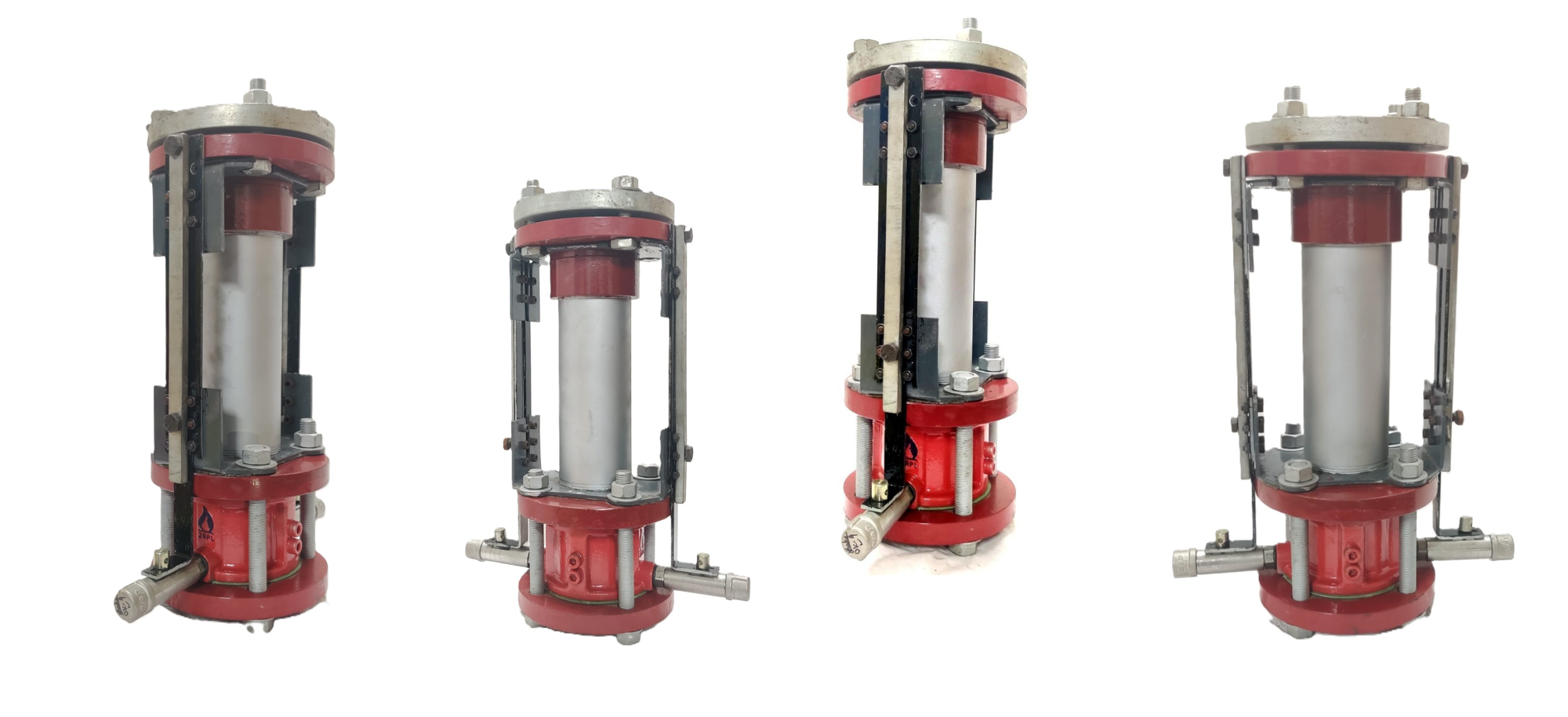
Components of ERVA
When Is it used?
When a Fixed Roof Tank’s roof is protected with Fire Water Spray System. Check out the video - https://www.youtube.com/@AgniRakshakindia
Why is it used?
Mandatory requirement of IS: 15325 {Refer Clause 8.4.2.5} and TAC Spray System Manual {Refer Clause 4.6.2.4} “The conical/flat roof shall also be protected by water spray system. For this purpose, sprayers shall be connected through an Explosion Relief Valve Assembly which enables sprayer piping on the top of the vessels to be blown off in the event of an explosion without obstructing the sprayers cooling the vertical sides”
If ERVA is not installed in the FWSS for Fixed roof tanks whose roof is protected, during the tank roof explosion (or blow-off) the complete FWSS from roof till the bottom will get disrupted and the sprayers to the Tank shell will become redundant.
Where is it installed?
Explosion Relief Valve Assembly (ERVA) is installed on the Riser Pipe slightly below Curb Angle level of Tank, in Vertical Position.
What are the various components of ERVA? - Check Above Image
How does it work?
Working is explained in 3 States of Tank – Normal State, Tank Roof Expanded State (but not blown-off), Roof Blow off State
Normal State:
During normal working condition, the STOP VALVE is in Open position and it allows the water to pass from downstream side to the upstream side on the riser.
Roof Expanded State:
During Fire, vapours are built up within a Fixed roof tank which pushes the roof upwards (deformation of the roof). During this condition, the Telescopic EXPANSION JOINT rises in tandem with the roof deformation. Here the STOP VALVE still allows the water to pass.
Roof Blow-off State:
During Large fires, vapours inside the tank exert enough pressure to blow-away the tank roof. During this blow-off stage, the Telescopic EXPANSION JOINT rises till its maximum limit and activates the RELEASE MECHANISM to close the STOP VALVE. Here, the STOP VALVE does not allow the water to pass through it thereby restricting the water at its downstream side. The detachment of the EXPANSION JOINT & closing of STOP VALVE allows the Spray system to be intact at the Tank shell and continues to cool the liquid/product inside the tank by spraying water on the shell. Product Patent Application #202421067488
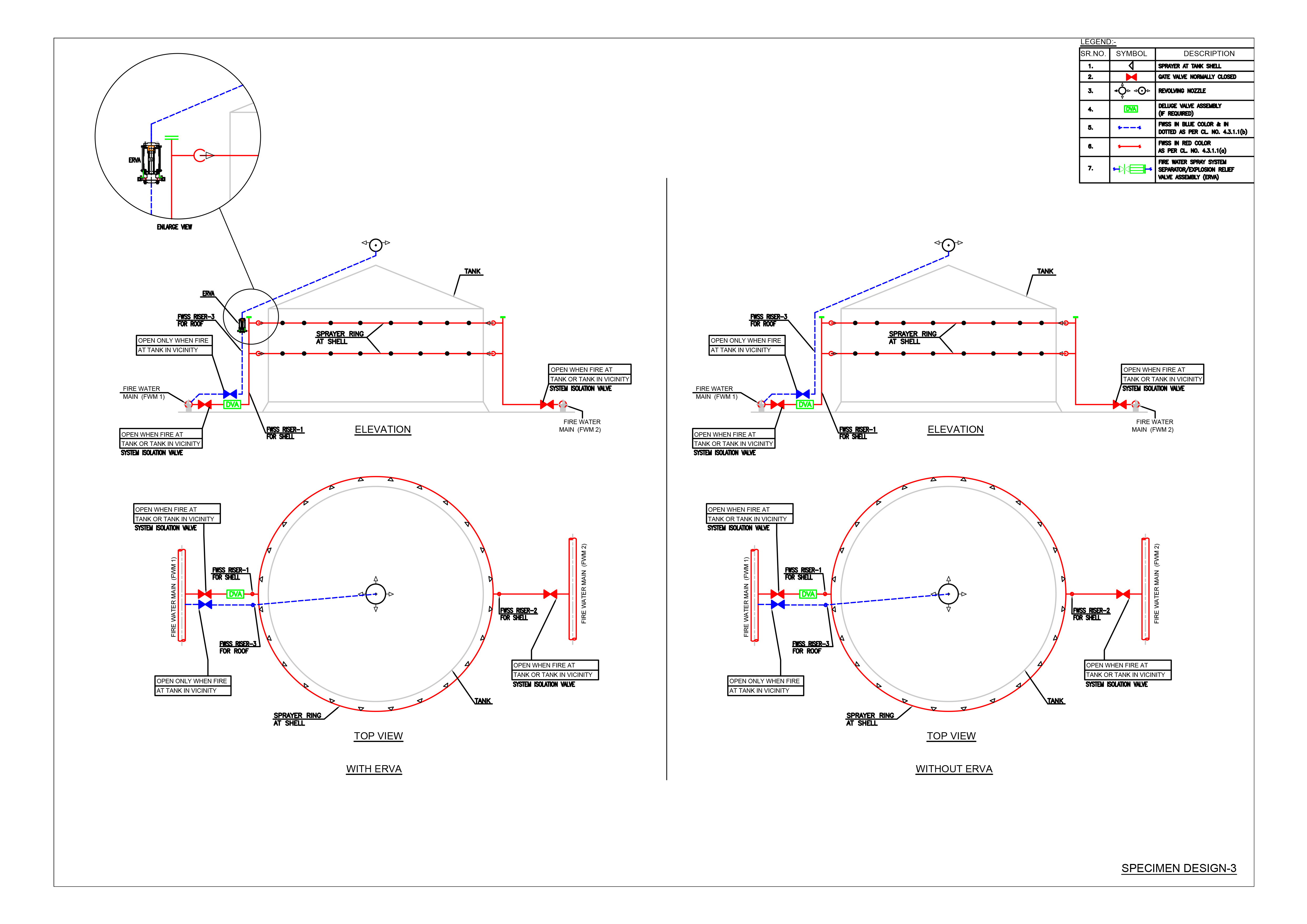
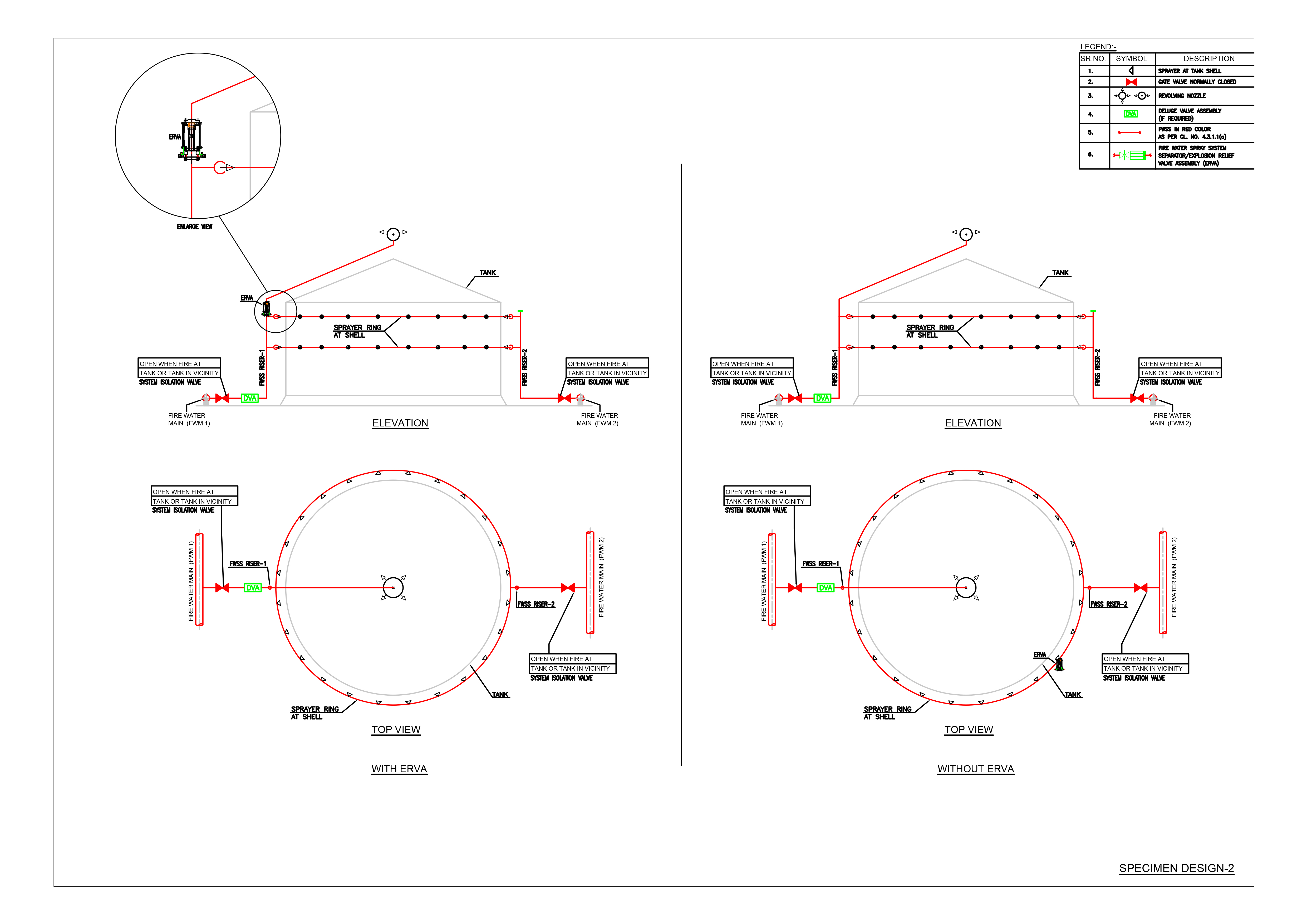
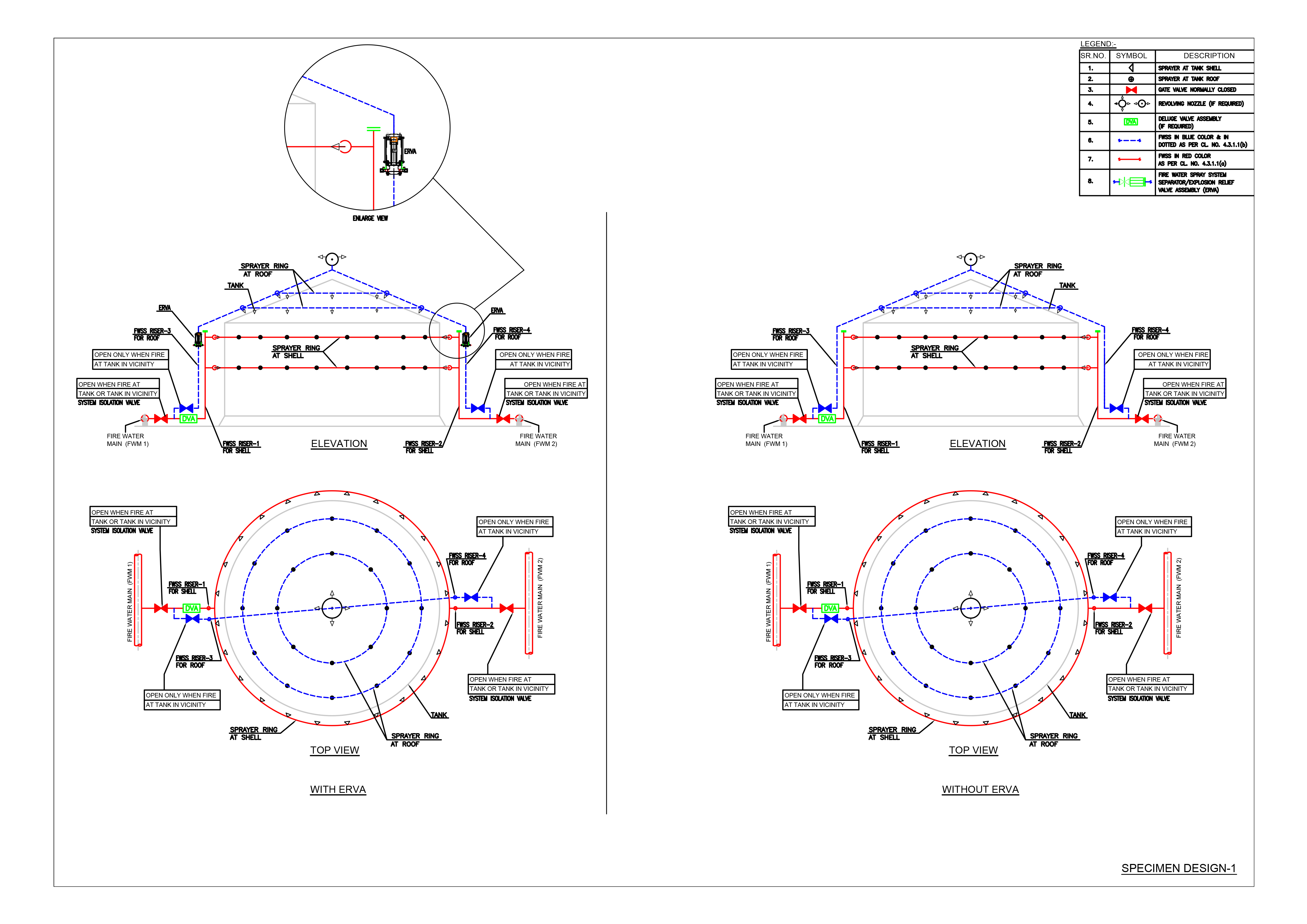
Above 3 Drawings Indicating The Placement of ERVA (Various Cases)
Photographs of ERVA "Patent Application #202421067488"
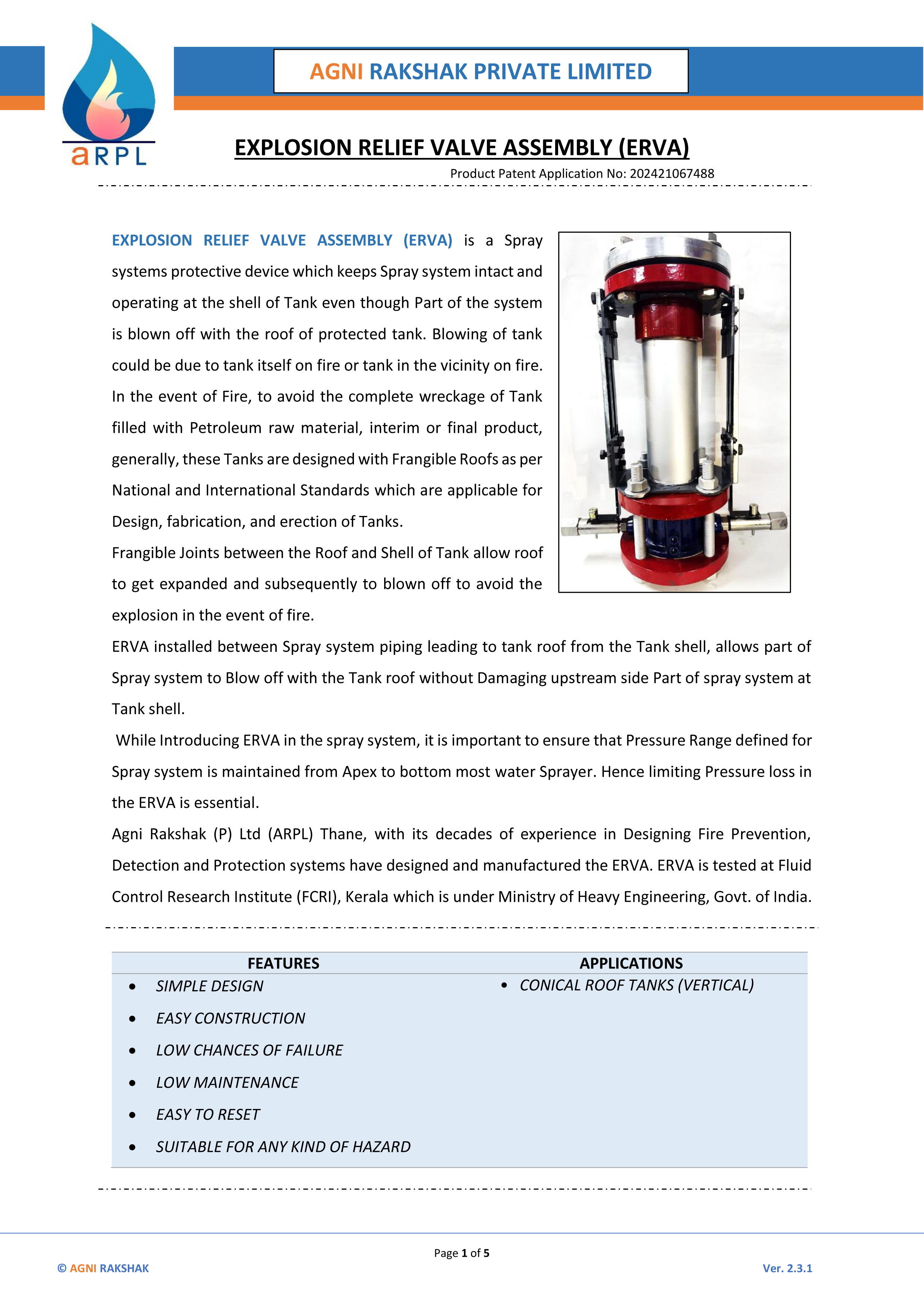
Product Catalogue
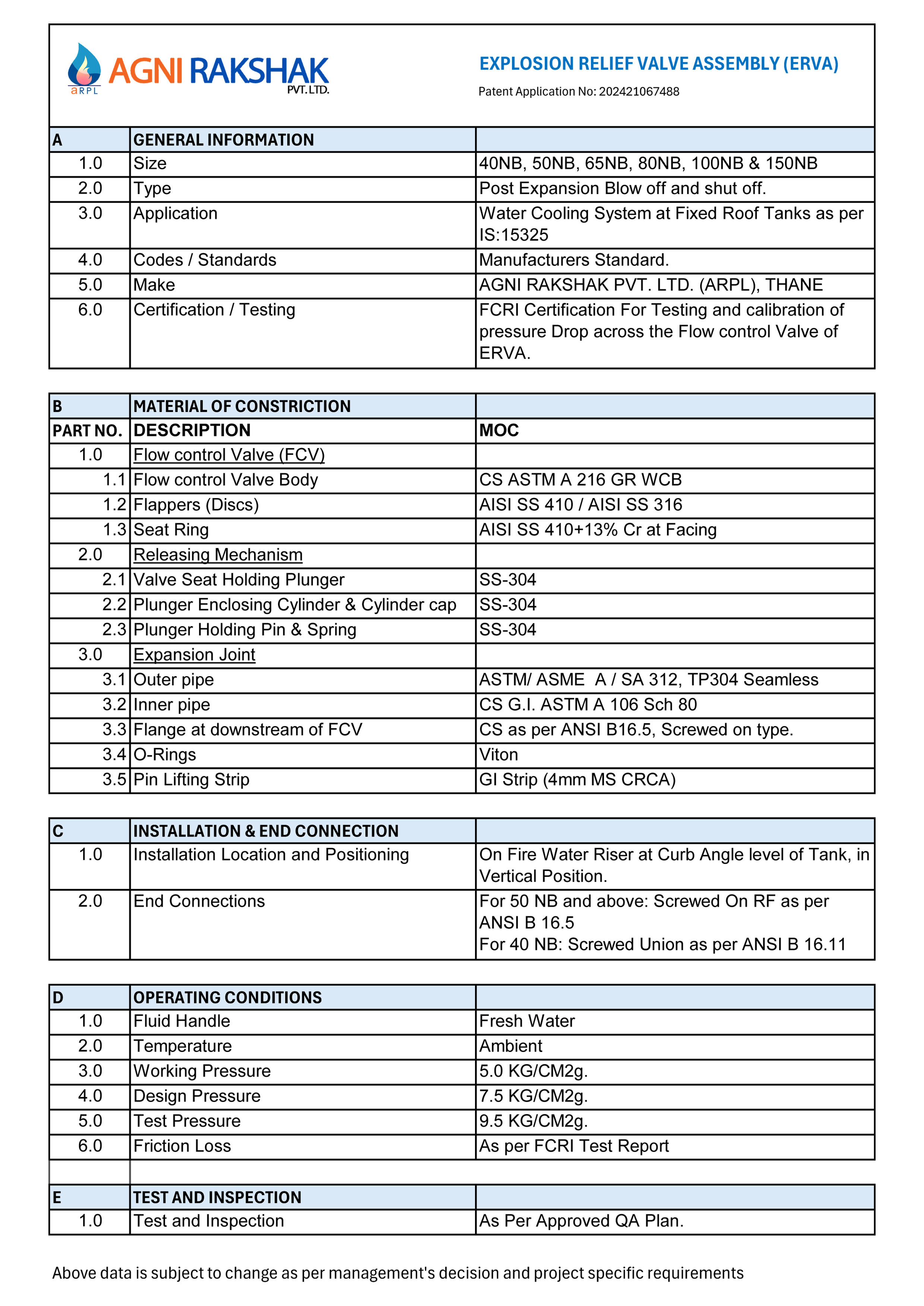
Datasheet